

Southampton County, VA
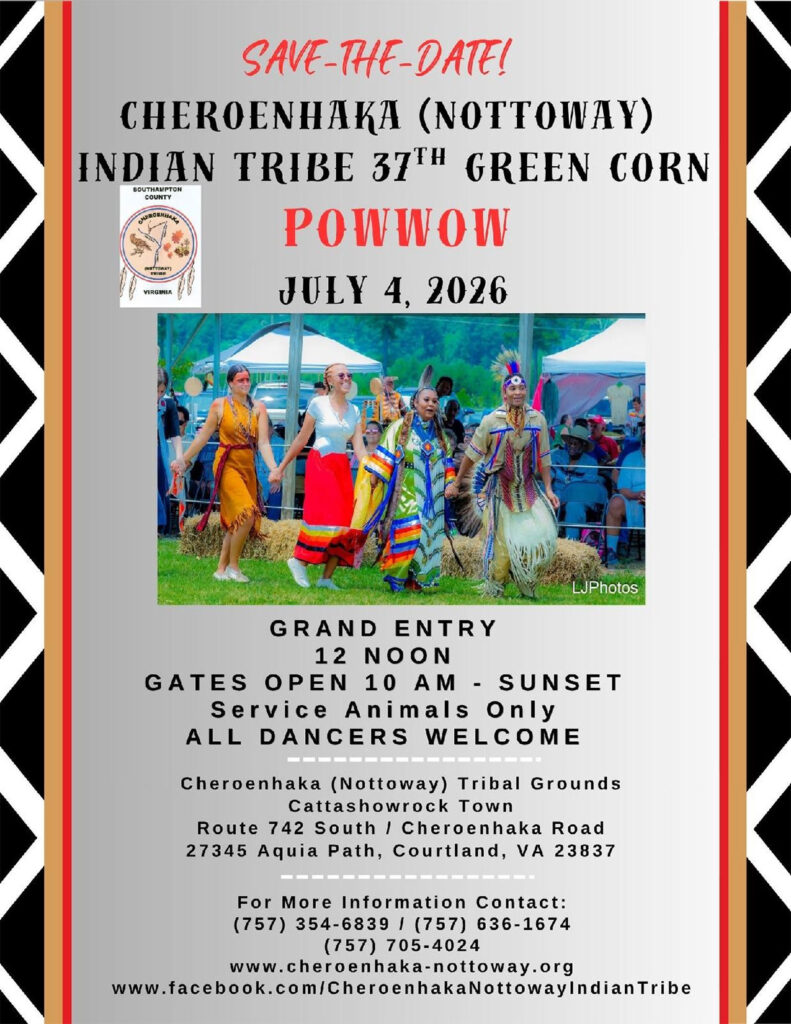
“WELCOME”
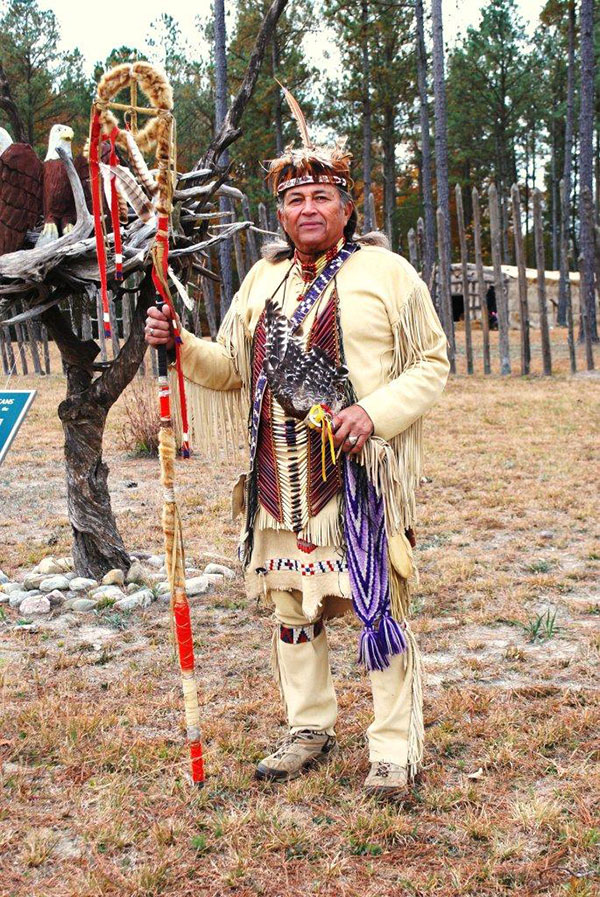
As our tribe’s spokesperson “Dar-sun-ke” (the Tongue), and Chief, it is with great zeal on behalf of the Cheroenhaka (Nottoway) Indian Tribal Council and Members, that we welcome you in the name of the Creator (Quaker-Hun-te) to our Tribal Web Site.
Each year we host three tribal events on our 263 acres of tribal land at Cattashowrock Town. A Green Corn Dance Powwow the first Saturday in July, a Native American Revival, Crusade for Christ / Yahshua, the Great Awakening of the Holy Spirit, on the third Saturday in September and an Intertribal Corn Harvest Powwow and School Day on the first weekend in November. The School Day is the Friday before the November Powwow with a bonfire that evening.
“Quaker Hun-te EE Sun-ke Was-ke-hee, Th-ra-hun-ta, Was-we-kr “
(Creator My Hearts Sees, Hears and Speaks).Chief Walt “Red Hawk” Brown, “Teerheer”
2026 Calendar
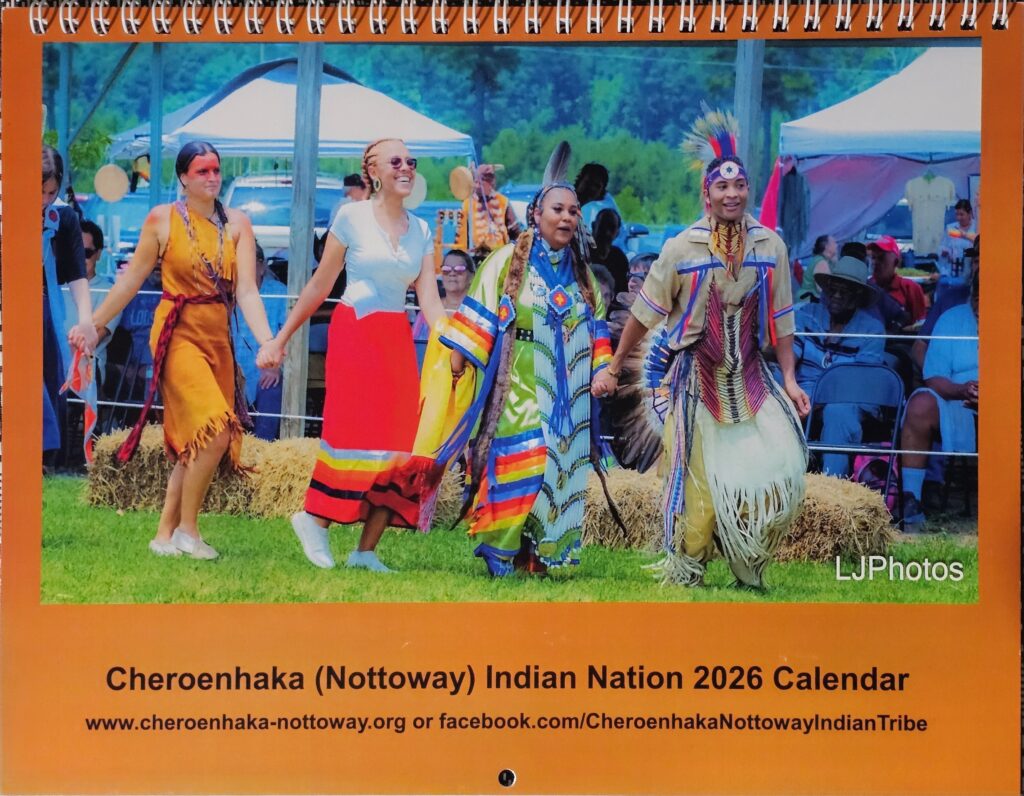
Calendar payments are to be made payable to the Cheroenhaka (Nottoway) Heritage Foundation via check, PayPal or Zelle. The calendars are $20 tax exempt plus $5 for mailing fee per calendar; or 2 calendars for $30 plus $5 shipping cost per calendar. They make great Christmas gifts! Go to theTribal website for Paypal: www.cheroenhaka-nottoway.org
Scroll down and click on Donate. Contact Karen Barrett at barrettkd20@gmail.com or Chief Walt Brown at wdbrowniii@aol.com for questions and once payment is made. Thank you.
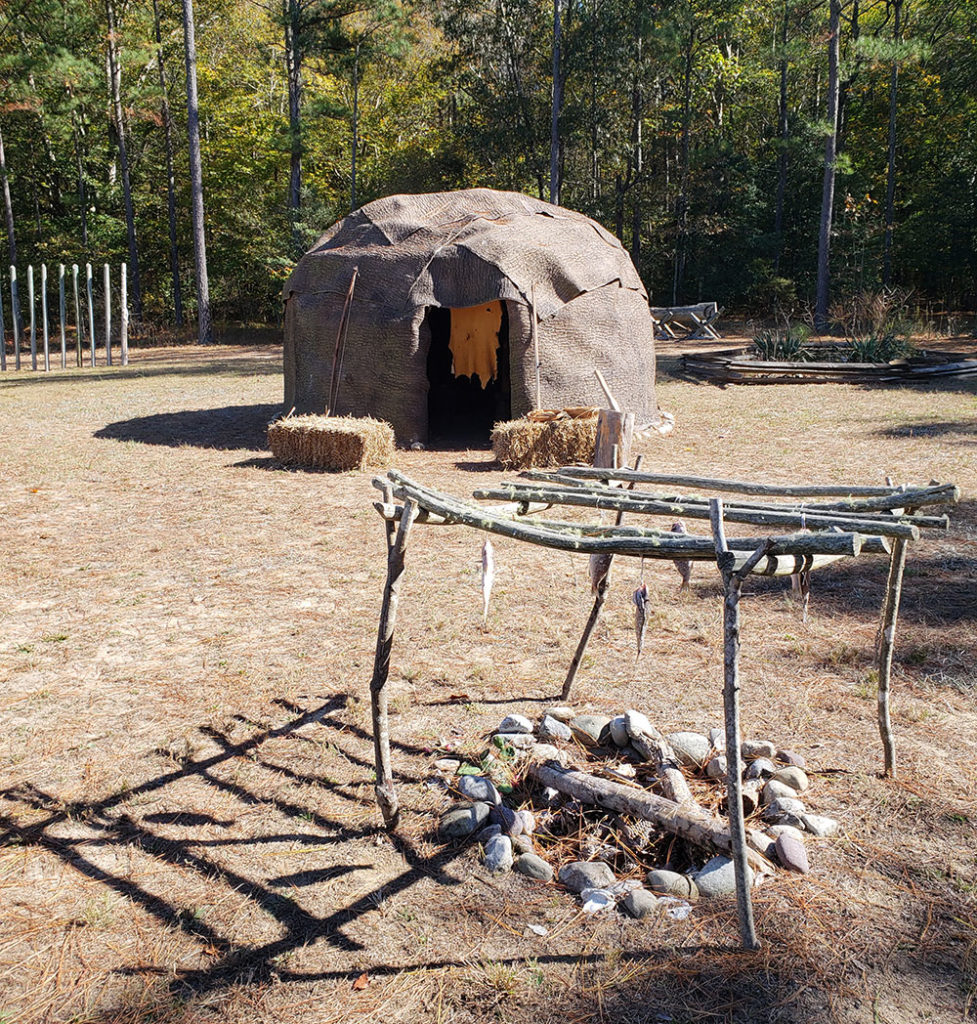
Visit Cattashowrock Town
Visit Cattashowrock Town, a 17th Century replica Native American Palisade Village, as identified by William Byrd II of Westover upon his visit to what is now Southampton County, Virginia on April 7th & 8th, 1728 and walk the interpretative trails guided by signage in our Iroquoian language and in English identifying Native Flora and Fauna indigenous to the area.
Tribal Council
Cheroenhaka (Nottoway) Indian Tribe
Current Tribal Council Members and Staff
| Tribal Chief/Council Chairman/President CNE-LLC/Heritage Foundation Chairman/ President CNE-Signature JV ,LLC | Chief Walt “Red Hawk” Brown |
| Vice Chief/ Chief Man/Tribal Treasure | Ellis “Soaring Eagle” Wright |
| War Chief/Chief Man/Powwow Color Guard Commander | William Lamb “Spread Eagle Howell |
| Council Woman/Roll Keeper/Face Book Administrator/ Grant Committee/CNE-LLC Secretary/CNE-Signature JV ,LLC Secretary | Caroh “Water Blossom” Holley |
| Chief Man//Grant Committee Vice Chairman/ CNIT Heritage Foundation Board Member | Gary “Twin Hawks” Burnette |
| Chief Man/ Council Member/Heritage Foundation Assistant Treasure/CNE-LLC Treasurer | Tommy “Star Watcher” Hines |
| Tribal Heritage Foundation Treasurer | Kitty “Yellow Sky Woman” Boone |
| Chief Man/Council Member / Powwow Co- Chairman /Tribal Land Maintenance Manager | Rickie “Two Beavers” Boone |
| Grant Committee Chairperson | LaStel “Talking Bird” Walker |
| Adopted Tribal Member/Heritage Foundation At Large Board Member/FD Financial Secretary/ASV Point of Contact | Teresa “Moon Star” Preston |
| Powwow Food Services Committee Chairman | Robert I “Running Eagle” Turner |
| Tribal Women’s Group Co-Chairs | Annie Thomas Carol Harrison |
Tribal Council’s Support Staff
| Chief Man/Tribal Website Administrator and Heritage Foundation Website Administrator / Food Services Committee. | Michael “Strong Tree” Skipper |
| Assistant Tribal Website Administrator | Deborah “Tiger Lily” Motahari |
| Educational Representative/School Day Coordinator/Tribal Media Rep/Tribal Calendar | Karen “Running Moon” Barrett |
| Tribal Fund Raiser Chairperson/Coordinator | Mary F. “Morning Rain” Wilkerson |
| Tribal College Book Scholarship Chairperson | Beverly “Barefoot” El |
| Three Sisters Garden Chair/ Powwow Food Services Committee/Adopted Tribal Member/Grant Committee | Colette “CoCo” Hayward |
| Three Sisters Garden Co-Chair / Honorary Tribal Member | Becky “Sun Star” Winslow |
| Powwow Food Services Finance Committee / Adopted Tribal Member Chief Man / Budget Committee Chairman / Powwow Co- Chairman | Diana “Smiling Fawn” Faison Robert C. “Walking Eagle” Turner |
| Chief Man / Cattashowrock Town Palisade Village Care Taker/ Powwow Co-Chairman | Ethan “Dancing Bear” Phelps |
| Powwow Food Services Committee / Honorary Tribal Member | Annie “Rain Tree” Skipper |